TL;DR
Google just dropped Gemini 3.6 Flash — and it's a big one. Released July 29, 2026 alongside Gemini 3.5 Flash-Lite and 3.5 Flash Cyber, this model brings elite-tier Agent capabilities, dramatically improved coding benchmarks (49% on DeepSWE), and ~65% token efficiency gains — all while remaining free. In our hands-on testing, Gemini 3.6 Flash generated complete 3D games from single prompts, accurately counted 71 overlapping toothpicks with just 1 error, autonomously navigated GitHub to analyze trending repos, batch-processed 100+ PDFs, and even produced an engineering-grade 3D wind turbine installation animation. If Google keeps it free, this could be the best value AI model on the market right now.
Quick Facts
| Metric | Data |
|---|---|
| Developer | Google DeepMind |
| Release Date | July 29, 2026 |
| Sibling Models | Gemini 3.5 Flash-Lite, Gemini 3.5 Flash Cyber |
| DeepSWE 1.0 | ~49% — approaching Claude Opus-level reasoning |
| Token Efficiency | Up to ~65% output token reduction vs other models |
| Key Capabilities | Code generation, multimodal understanding, Agent workflows, long-document processing |
| Agent Platform | Antigravity (Windows/macOS/Linux) — Python execution, file system, browser control |
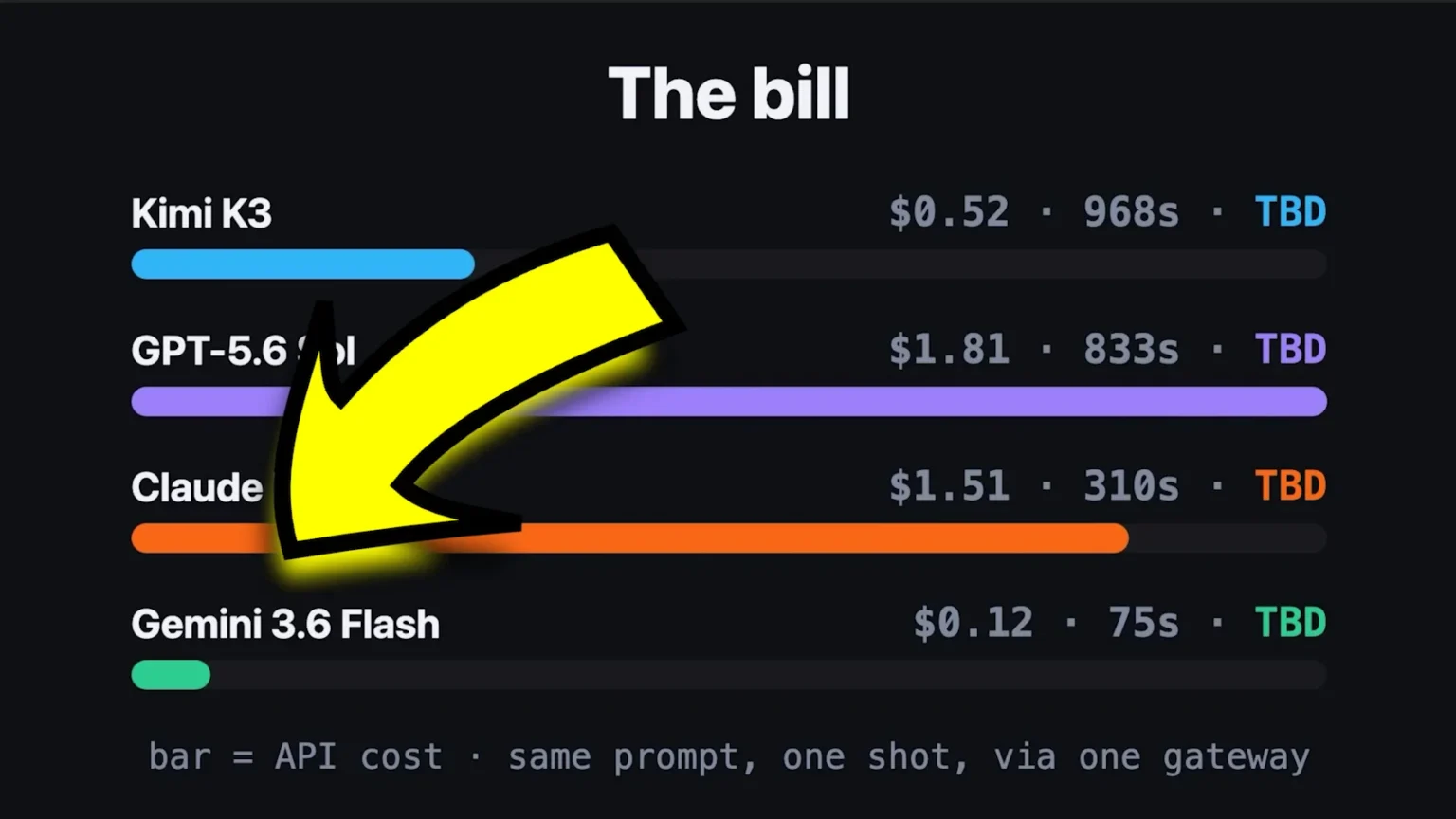
| API Cost | ~$0.10 per complex task — cheapest among GPT, Claude, and Kimi K3 in our tests |
| Pricing | Free (currently) via Google AI Studio and Antigravity |
Why Gemini 3.6 Flash Matters
Google has been playing catch-up in the AI race. The Gemini Flash series was always known for speed, but raw capability lagged behind Claude and GPT. Gemini 3.6 Flash changes that narrative. Three things make this release significant:
1. Agent-Native Architecture. Google explicitly designed Gemini 3.6 Flash for multi-step Agent workflows. Through the Antigravity platform, the model can execute Python code, browse the web, read and write files, and chain tools together — all autonomously.
2. Token Efficiency That Changes Economics. Gemini 3.6 Flash outputs ~65% fewer tokens for the same tasks. Faster responses, lower latency, API costs cut nearly in half.
3. Free — And Actually Good. Previous Flash models felt like "you get what you pay for." Not anymore. 49% DeepSWE puts it within striking distance of Claude Opus, and it's free.
Benchmark Deep Dive
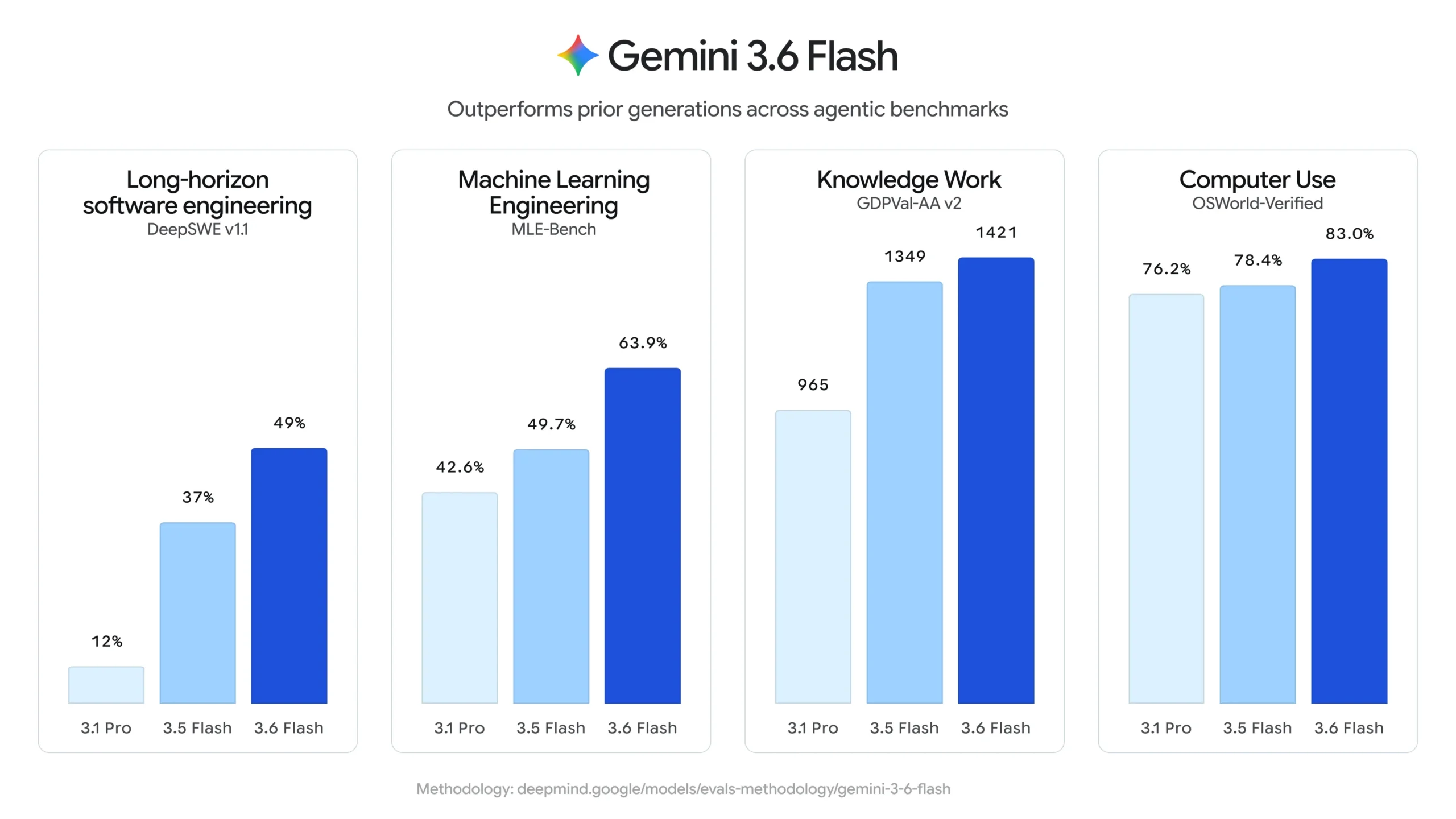
According to Google's official data, Gemini 3.6 Flash comprehensively surpasses the previous Flash generation across Agent tasks, code generation, and multimodal benchmarks:
• Faster generation speed — noticeably quicker output than previous Flash models
• Reduced loop/correction cycles — less likely to get stuck correcting its own mistakes
• Multimodal gains — chart analysis, document understanding, and report generation all show meaningful improvements over Gemini 3.1 Pro and 3.5 Flash
• DeepSWE at ~49% — approaching Claude Opus-level software engineering, a massive leap for a free-tier model
Token Efficiency: ~65% Reduction
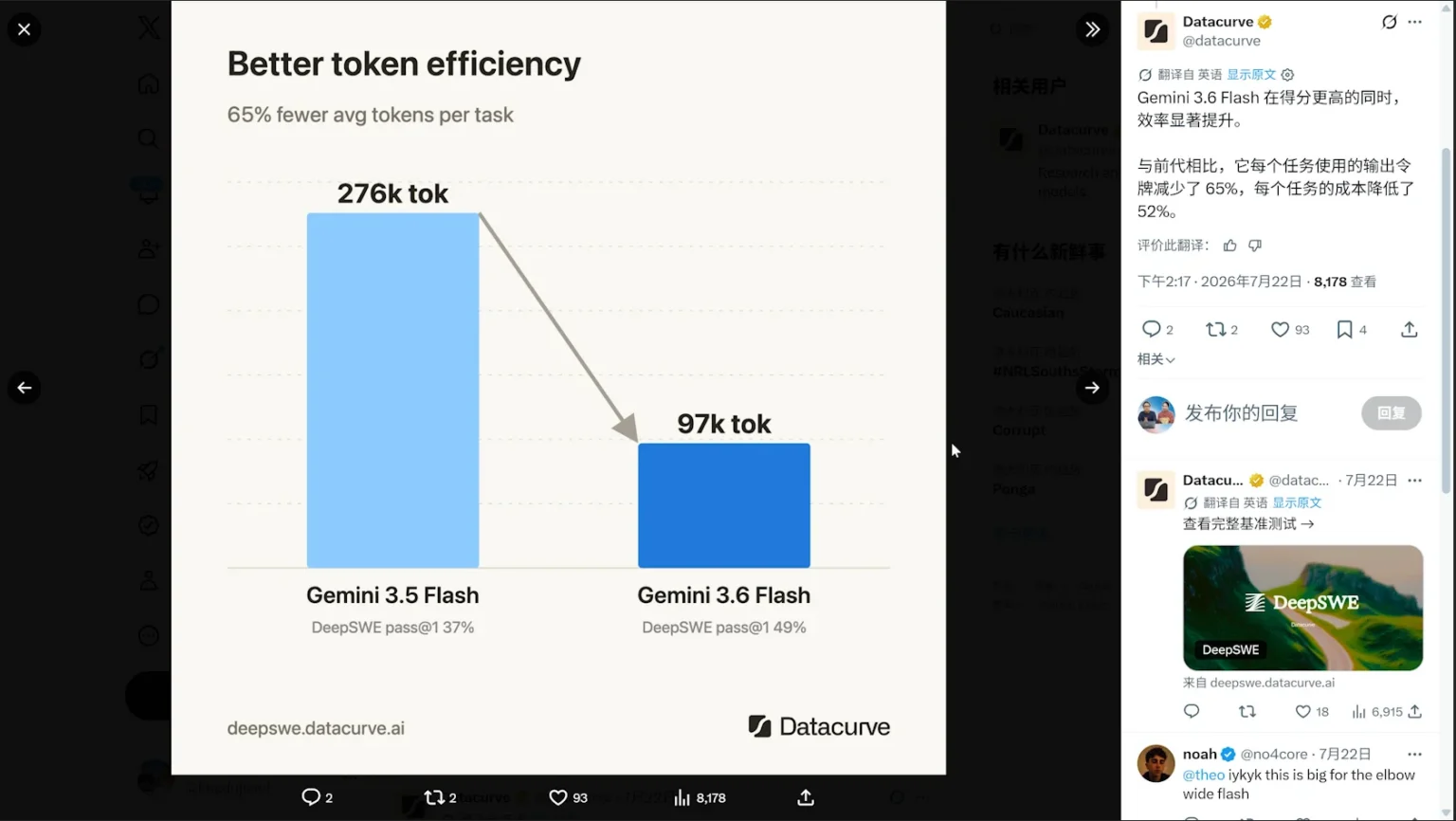
Developer communities quickly noticed: Gemini 3.6 Flash produces significantly fewer output tokens for identical tasks. Google's official data confirms up to ~65% token reduction compared to other models:
• Same task → 65% fewer tokens → ~50% lower API cost
• Better performance → faster responses → less waiting
• Lower API bills for the same workload → more budget for experimentation
For developers and startups building on AI APIs, this efficiency gain might matter more than any benchmark score.
Real-World Coding Tests
Test 1: Fruit Ninja-Style HTML Game
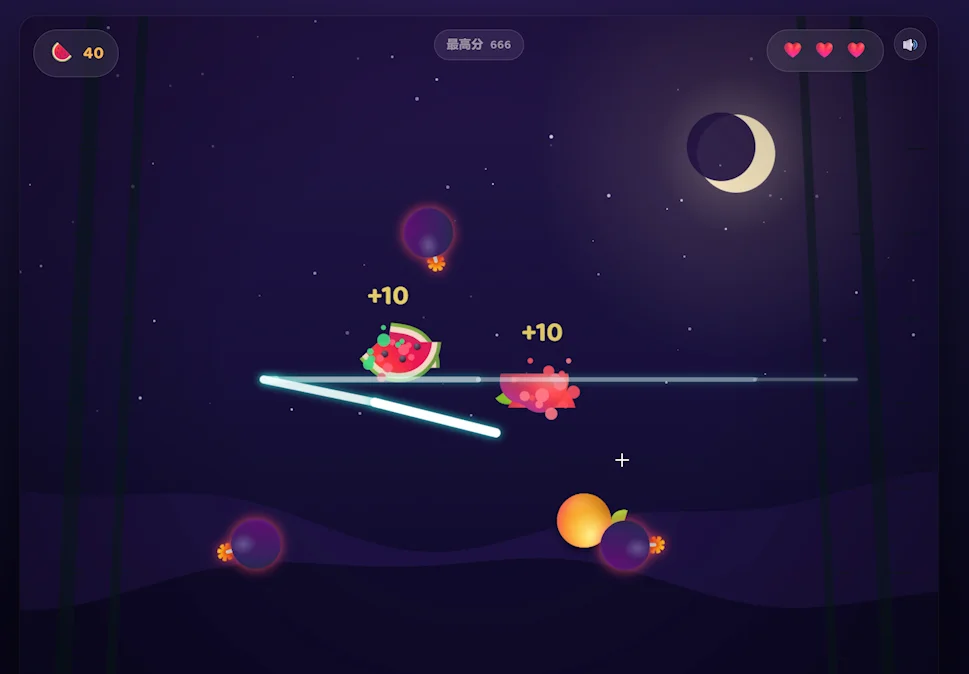
We asked Gemini 3.6 Flash to generate a complete Fruit Ninja-style browser game — slicing mechanics, score tracking, sound effects. The entire project was generated in a single response as a self-contained HTML file. Downloaded, opened, and it just worked. Sound effects played, slicing mechanics were responsive, game loop ran smoothly. Zero debugging required.
Test 2: 3D Pool Table Game with Real Physics
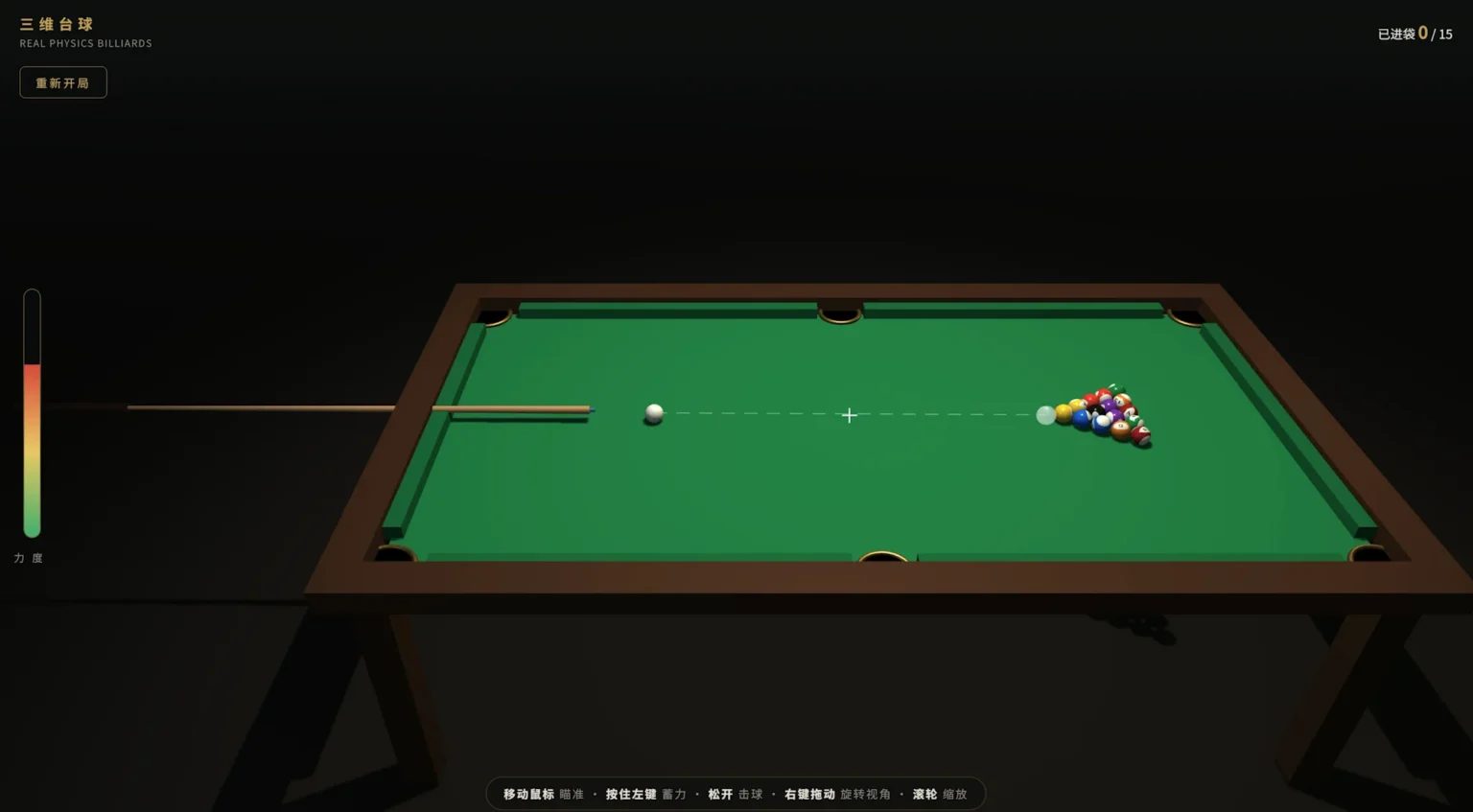
We raised the difficulty: "Generate a 3D pool table game with collision detection, friction simulation, pocket detection, force control, and camera rotation." Gemini 3.6 Flash chose Three.js + Cannon.js and generated the complete project in one shot.
The result: realistic ball collisions, proper friction and roll physics, working pocket detection, and smooth camera controls. The cue ball responded naturally to angle and force, and pocketed balls behaved correctly. For a one-shot AI-generated 3D physics game, remarkably polished.
Multimodal Testing: Counting Sticks and Tags
AI models are notoriously bad at counting objects in images — especially small, overlapping ones. We put Gemini 3.6 Flash through two increasingly difficult counting tests.
Test 1: Toothpicks (71 Total)
We showed Gemini a dense image of scattered toothpicks with significant overlap. The model intelligently divided the image into regions, counted each, and estimated ~70 toothpicks. The actual count was 71 — an error of just 1, despite many sticks overlapping. Excellent precision for a general-purpose vision model.
Test 2: Skewer Tags (17 Total)
An even harder case: narrow skewer tags — thin, partially stacked, and overlapping. Gemini 3.6 Flash correctly identified all 17 — zero errors. Being able to count such tiny, dense, overlapping objects demonstrates high-resolution visual understanding that rivals specialized vision models.

Agent Capabilities: The Antigravity Platform
Where Gemini 3.6 Flash truly separates from the pack is its Agent capabilities via Antigravity, Google's AI Agent orchestration platform (available for Windows, macOS, Linux). Antigravity gives the model access to Python execution, file system operations, web browsing, and tool chaining.
Agent Demo 1: Autonomous GitHub Research
One instruction: "Open GitHub, find the highest-starred AI Agent repositories, analyze their code structure, and summarize the framework designs." The model autonomously:
1. Used Python to access the GitHub API
2. Queried repositories sorted by stars in the AI Agent category
3. Correctly identified OpenClaw (38K+ stars, TypeScript/Node.js) and Hermes (22K+ stars, Python) as the leaders
4. Analyzed project directory structures and core code patterns
5. Produced architectural summaries — and cross-referenced star counts to verify accuracy
Agent Demo 2: 100+ PDF Batch Analysis
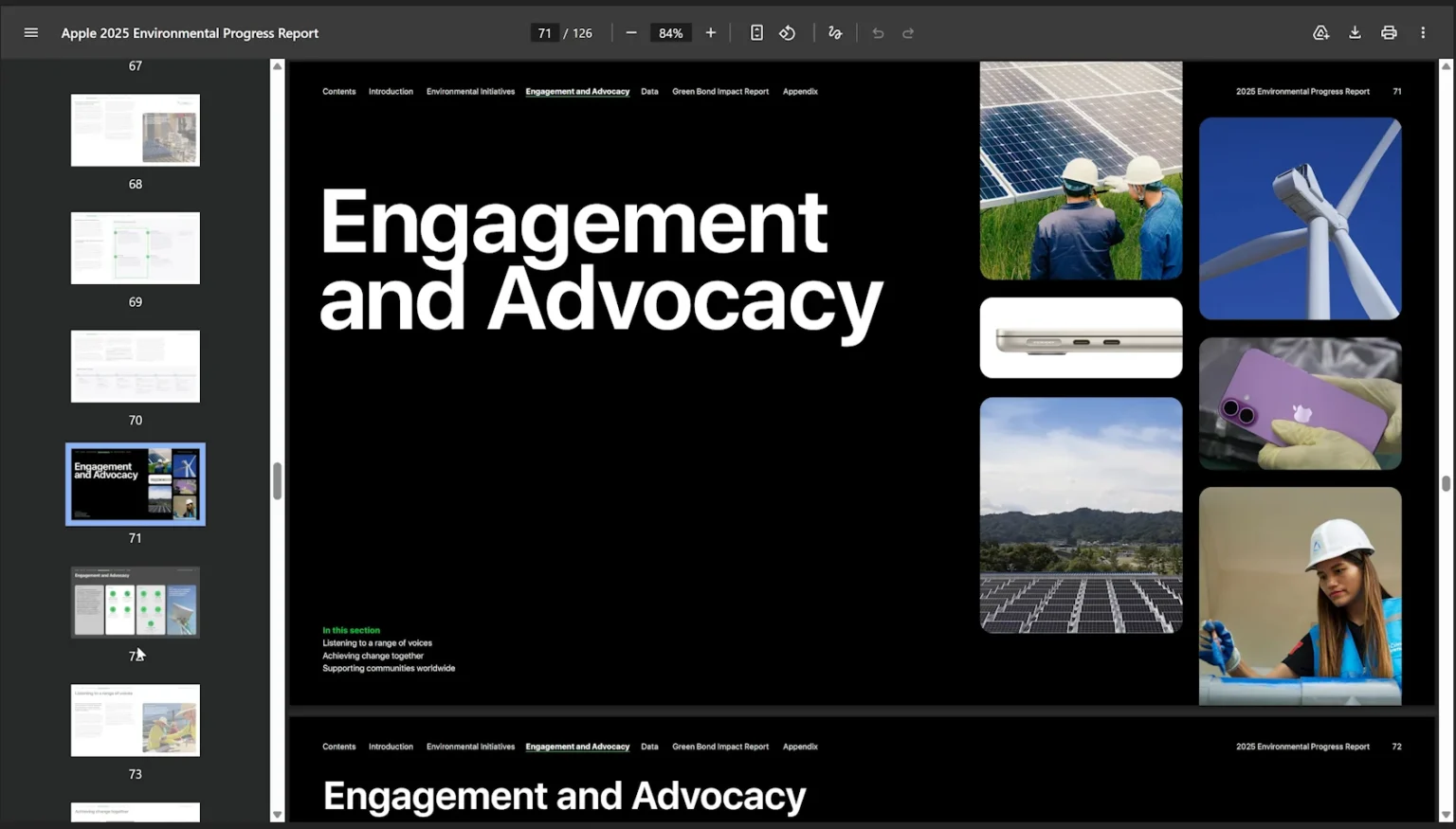
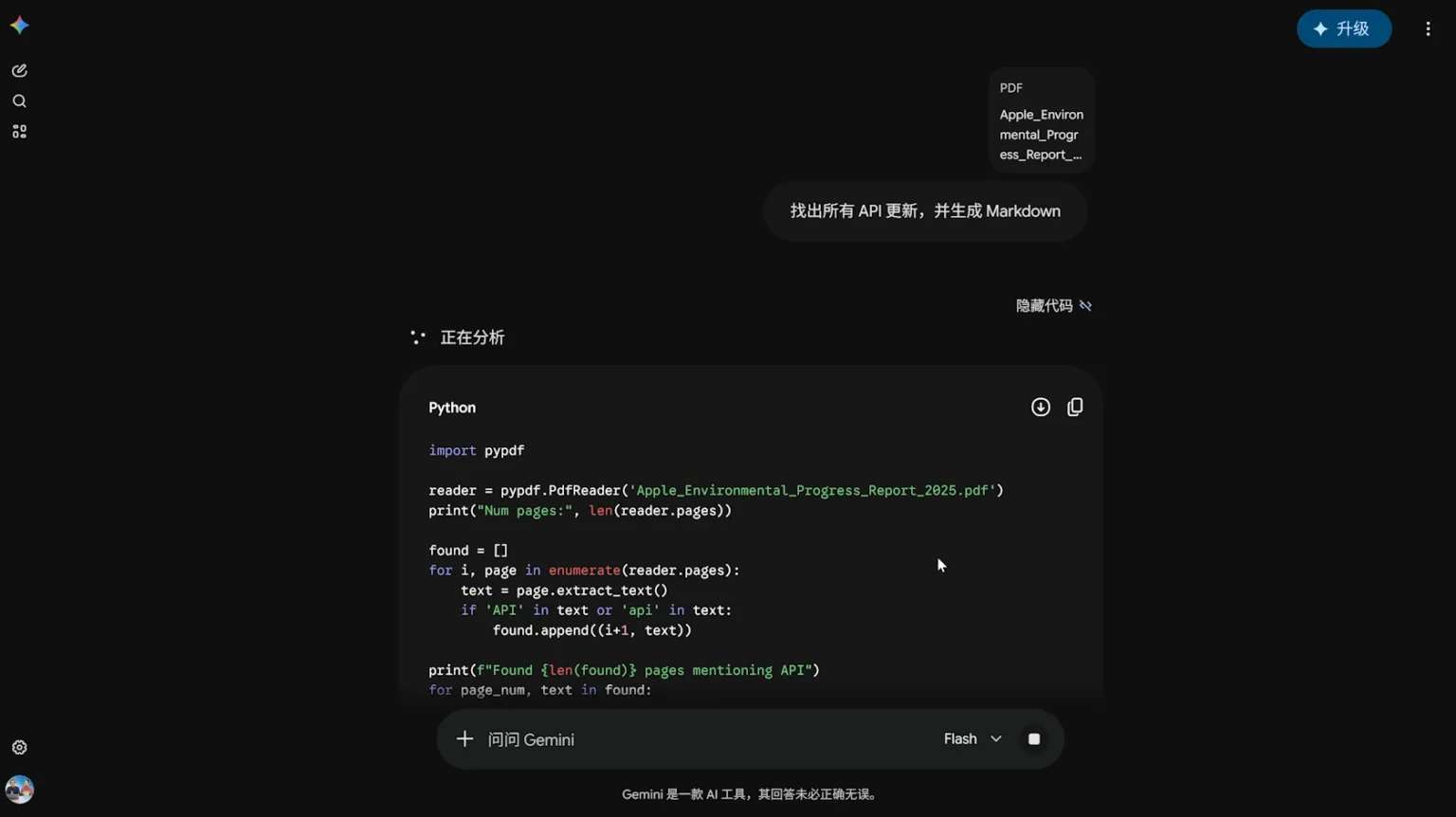
Upload over 100 PDF files, ask the model to find all API-related content and compile into structured Markdown. Gemini 3.6 Flash called Python to batch-process all PDFs, extracted relevant API sections, synthesized findings, and output clean Markdown. Production-ready quality — this replaces hours of manual document review.
Agent Demo 3: Engineering-Grade 3D Wind Turbine Animation
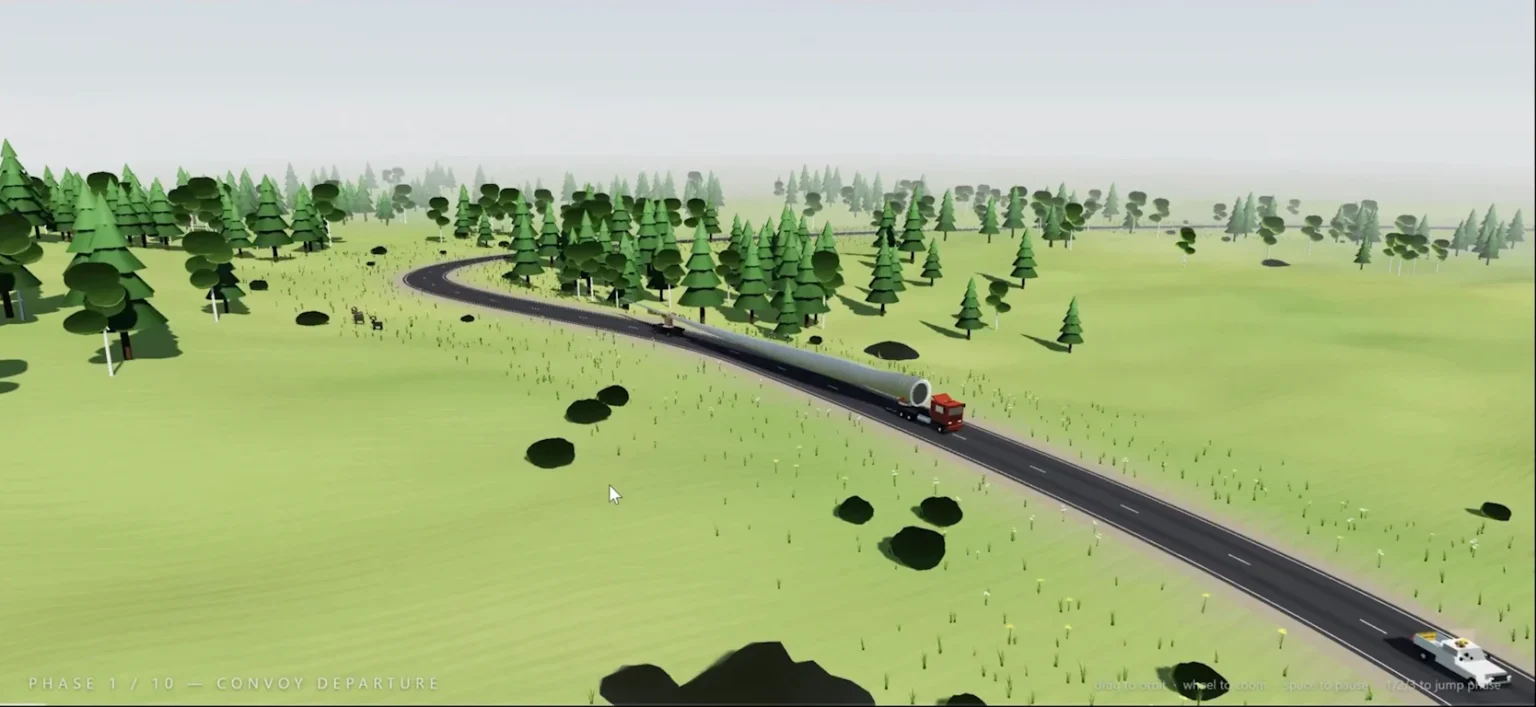
This was the show-stopper. We gave Gemini 3.6 Flash a ~600-word prompt describing a complete wind turbine installation: heavy truck transport along winding mountain roads, crawler crane lifting, and precision blade mounting. Technical requirements: CatmullRomCurve3 path curves, smooth camera transitions, realistic proportions, all models built from Three.js primitives.
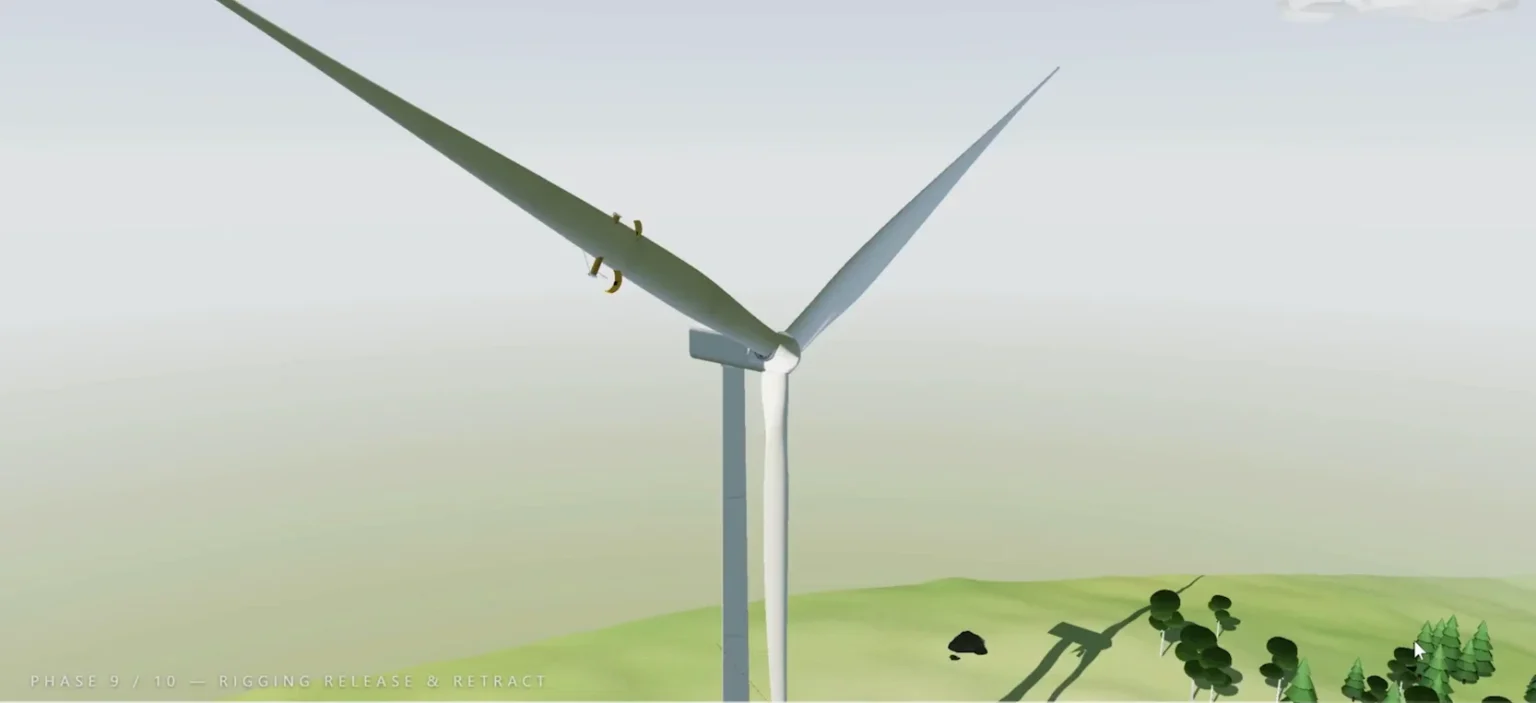
The model generated a single HTML file including: mountain terrain with winding road, truck transporting a long blade following road curves, crawler crane lifting the blade, and blade precisely mounted onto the turbine hub — with smooth camera transitions, progress indicator, and replay button.
What makes this impressive isn't visual fidelity — models are basic Three.js primitives. It's the spatial reasoning: the AI understood the construction workflow, relative equipment sizes, road-to-platform logistics, and sequential installation process. This kind of engineering visualization used to take professional 3D modelers days or weeks. Now it takes a single prompt and minutes.
API Pricing: The Cheapest Frontier Model
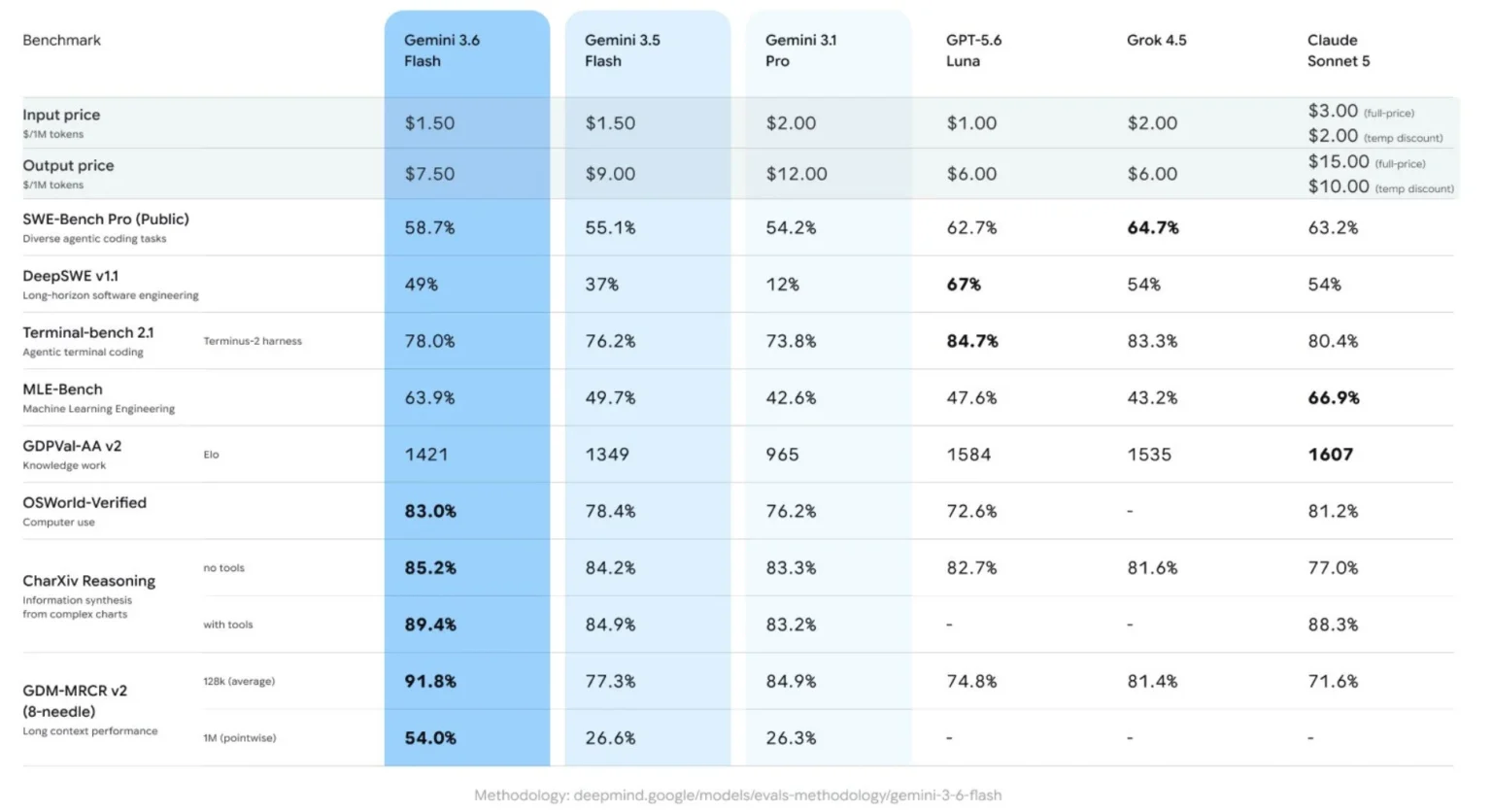
We tested API costs across identical prompts. Gemini 3.6 Flash delivered the lowest total cost at approximately $0.10 per complex task — significantly cheaper than GPT, Claude, and Kimi K3. Combined with ~65% token efficiency, the total cost of ownership is dramatically lower than any other frontier-tier model.
Competitive Landscape
Gemini 3.6 Flash vs Claude Opus / Fable
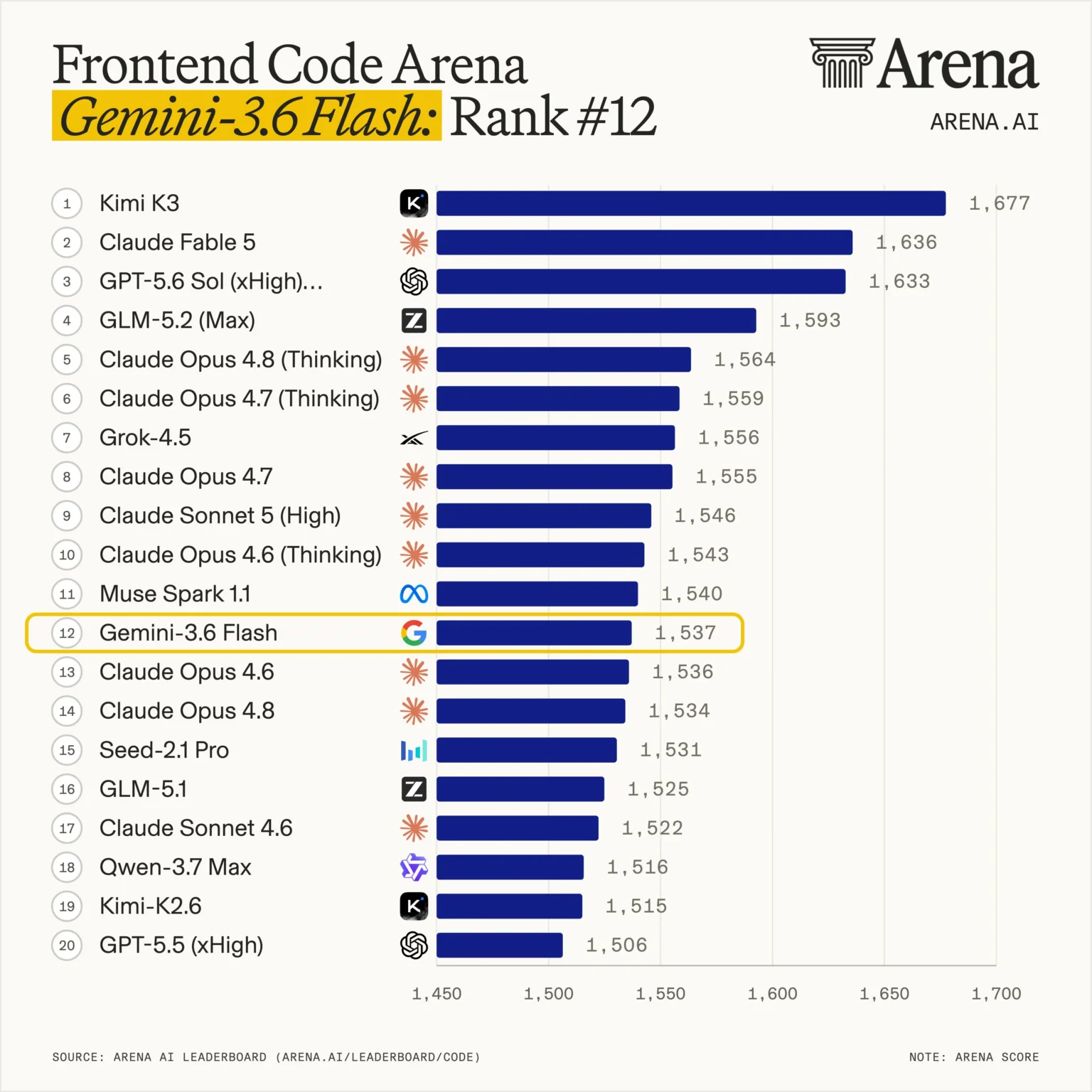
Claude still leads on pure reasoning depth — Fable Max scores higher on DeepSWE. But Gemini 3.6 Flash is free. Claude costs $20/month. For 80% of real-world use cases, they're in the same conversation.
Gemini 3.6 Flash vs GPT-5.5 / GPT-5.6
OpenAI's latest still edge ahead on raw capability, but the gap is shrinking fast. Gemini's token efficiency means lower API costs for the same workload.
Gemini 3.6 Flash vs Kimi K3
Kimi K3 is open-source with multimodal generation (text, image, video, 3D). Gemini is closed-source but free, with better Agent platform integration and superior token efficiency. Need open-weight self-hosting? Go K3. Want cheapest API with native Agent tooling? Go Gemini.
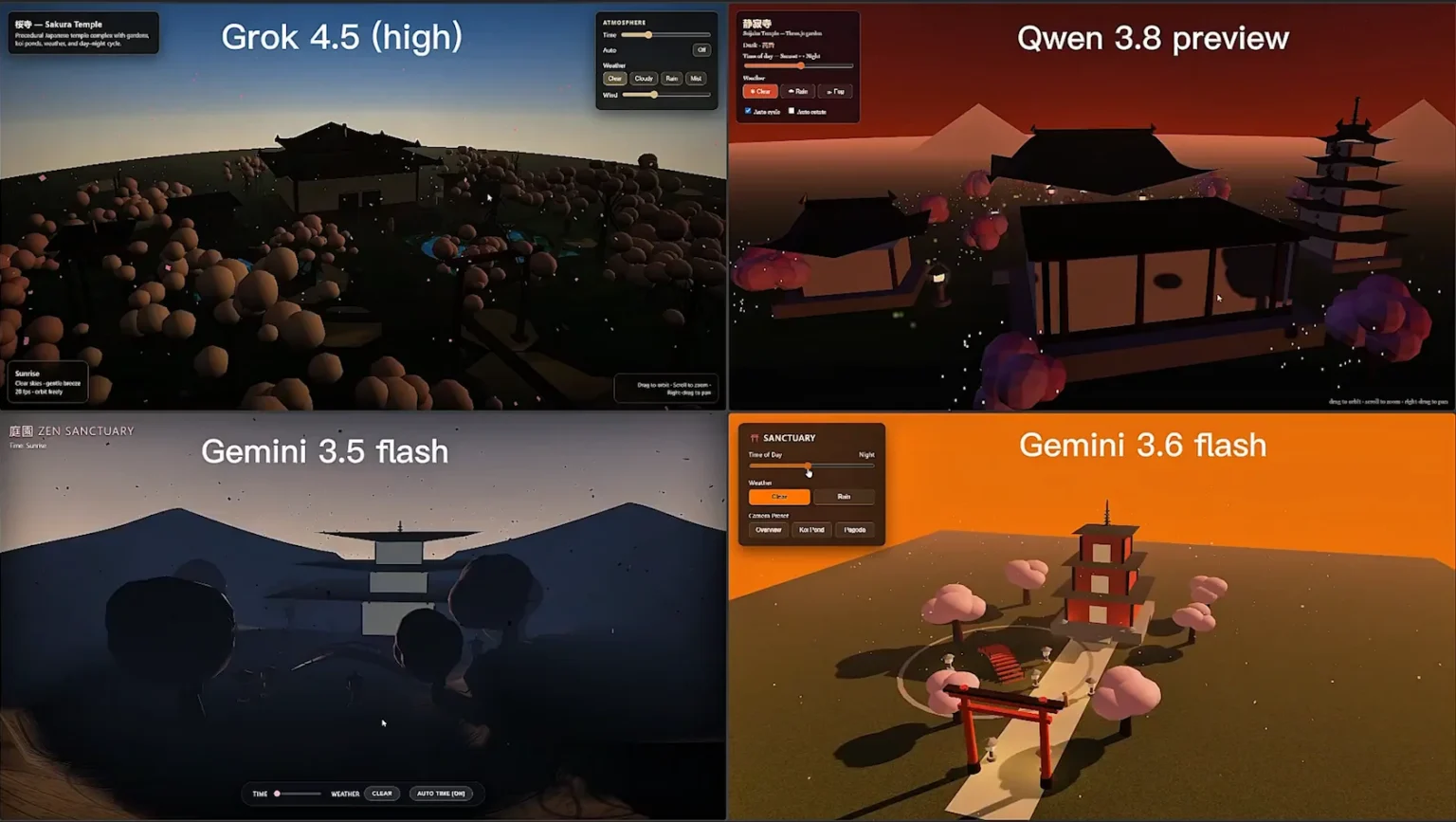
Gemini 3.6 Flash vs Grok 4.5
Both free, both strong on coding. Gemini has multimodal understanding and Antigravity. Grok requires an X account; Gemini works with any Google account.
Who Should Use Gemini 3.6 Flash?
Use it if you are: a developer wanting a free coding assistant with Agent tooling; a startup building on AI APIs (token efficiency is unmatched); a researcher needing batch document processing; a student priced out of $20/month subscriptions.
Skip it if you: need absolute best reasoning scores (Claude/GPT still lead); require multimodal generation (image/video/3D output); prefer open-source self-hosting; need enterprise SLAs; work in mainland China without VPN access to Google services.
FAQ
Is Gemini 3.6 Flash really free?
Yes — currently. Google offers it free through Google AI Studio and Antigravity. Long-term pricing hasn't been announced.
How do I access it?
Google AI Studio (aistudio.google.com) for chat and API, or Antigravity platform for Agent workflows. Both currently free.
What is Antigravity?
Google's AI Agent orchestration platform. Gives models access to Python execution, file system, and web browsing for autonomous multi-step workflows. Available for Windows, macOS, and Linux.
Is it better than Claude for coding?
On DeepSWE, Claude Fable Max still leads. But Gemini 3.6 Flash is free and competitive for most real-world tasks. The price-to-performance ratio heavily favors Gemini for budget-conscious developers.
Can it generate images or videos?
No. Gemini 3.6 Flash understands images (multimodal input) but cannot generate them. For generation, use Imagen, DALL-E, Midjourney, or Kling.
Will it stay free?
Unknown. Given competition (Grok 4.5 is also free), Google has incentive to maintain a generous free tier — but budget as if this could change.