TL;DR
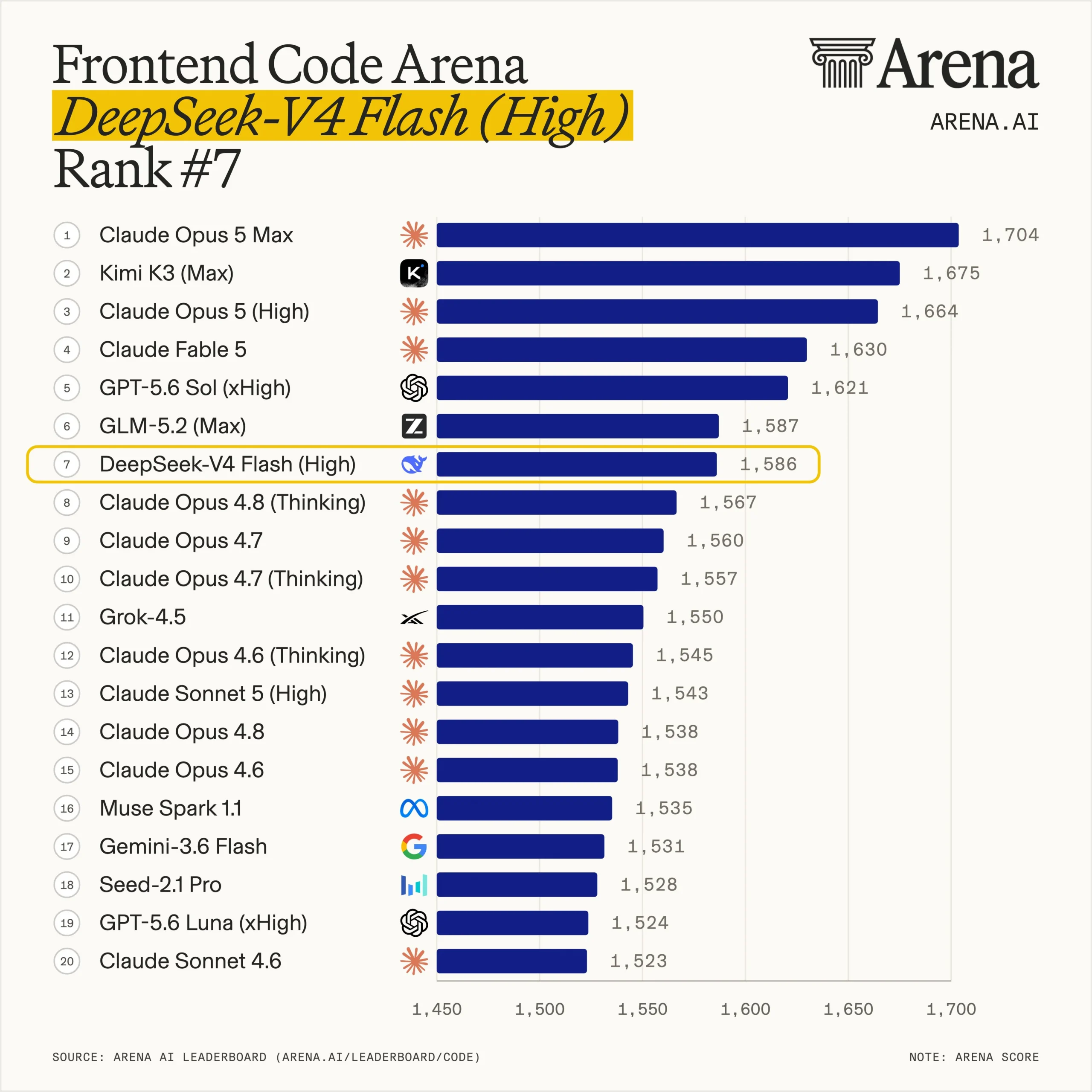
On August 1, 2026, DeepSeek dropped DeepSeek V4 Flash 0731 — and it's not just another point release. This update brings native Responses API support, full Codex compatibility, and a massive leap in Agent capabilities. The model jumped 154 points on Frontend Coding Arena in a single update, landing at #7 globally — making it the #3 open-source model on the leaderboard.
But the real headline? The pricing. Developers are reporting tasks that cost $0.0005 — yes, five-hundredths of a cent. A 32-minute continuous Agent session cost 7 cents. Some are calling it the highest cost-performance ratio of any model currently available.
I spent a day testing DeepSeek V4 Flash through Hermes Agent against GPT-5.6, Gemini 3.6 Flash, and Kimi K3. Here's everything you need to know — with 8 real demos.
Quick Facts
| Spec | Value |
|---|---|
| Model Name | DeepSeek-V4-Flash-0731 |
| Architecture | Mixture-of-Experts (MoE) |
| Key New Features | Responses API, Codex, Enhanced Agent |
| Local Deployment | GGUF (4-bit: 168GB RAM, 3-bit: 110GB RAM) |
| License | Open weights (Apache-compatible) |
| Free API | HuggingFace Inference → (community-hosted, no token required) |
| Download | HuggingFace → / GGUF on ModelScope |
Why DeepSeek V4 Flash Changes the Game
DeepSeek has been on a tear in 2026, but this update is different. The V4 Flash 0731 release isn't about scaling up — it's about making the model genuinely useful for real work.
Here's what changed from the preview version:
- Agent capabilities massively upgraded — the model can now sustain complex multi-step workflows without derailing
- Native Responses API support — plug directly into Hermes Agent, OpenRouter, or any OpenAI-compatible client
- Full Codex compatibility — the model now speaks the same tool-use protocol as GPT-5.6 and Claude
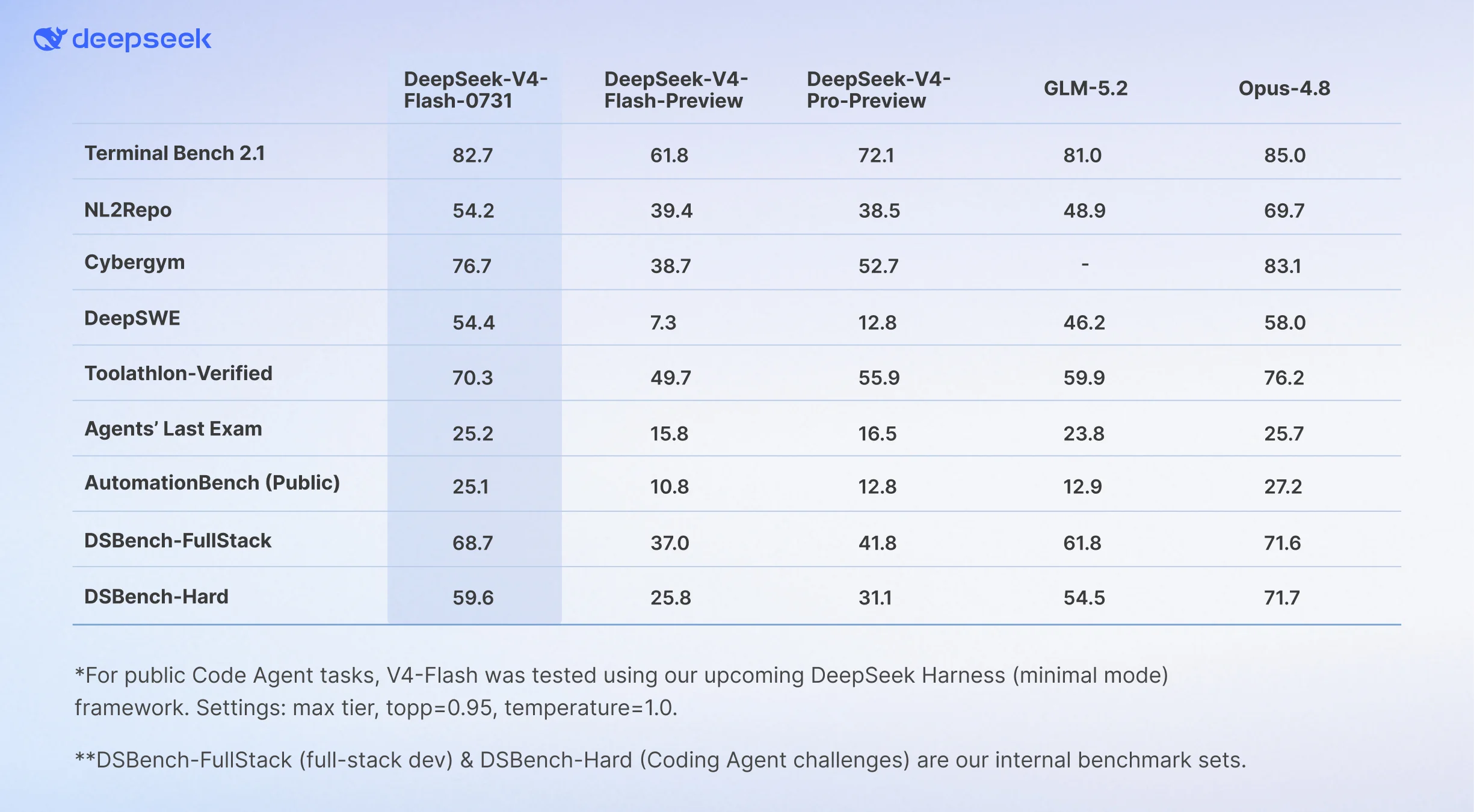
- Overall reasoning significantly improved — multiple benchmarks now surpass the previous V4-Pro-Preview
The practical upshot: this is the first "Flash" model that doesn't feel like a compromise. It's fast, it's cheap, and it actually delivers on complex tasks.

Benchmark Deep Dive: A 154-Point Jump in One Update
When the preview version of V4 Flash landed, it was good — but not great. The 0731 update changed everything.
On Frontend Coding Arena, DeepSeek V4 Flash High now sits at:
- Global rank: #7 (up from outside the top 20)
- Score: 1586 — a 154-point improvement in a single update
- Open-source rank: #3 — behind only the largest MoE giants
- Consumer-product rank: #4 — competing directly with proprietary flagships
- Data & Analysis: #6 | Reference Design: #6 | Game: #6 | Brand & Marketing: #7
That's not incremental progress. That's a generational leap delivered through software optimization, not model retraining — which tells you how much untapped potential is still in these architectures.
Real-World Tests: 8 Demos That Prove the Value
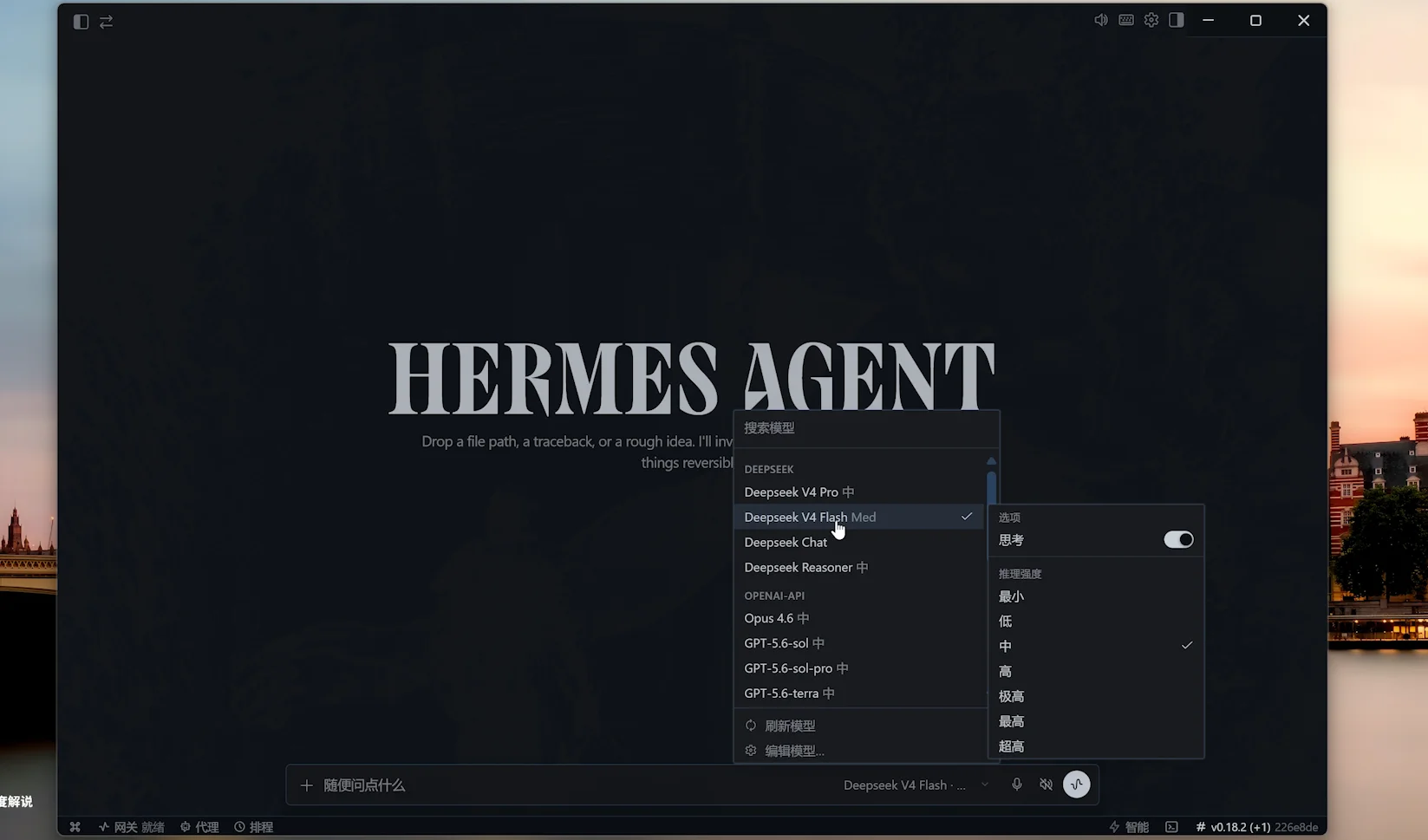
I've learned not to trust benchmarks alone. So I wired DeepSeek V4 Flash into Hermes Agent (which now natively supports OpenAI Responses API — plug-and-play with DeepSeek's new endpoint) and put it through a gauntlet of real tasks. Here are the 8 most revealing results.
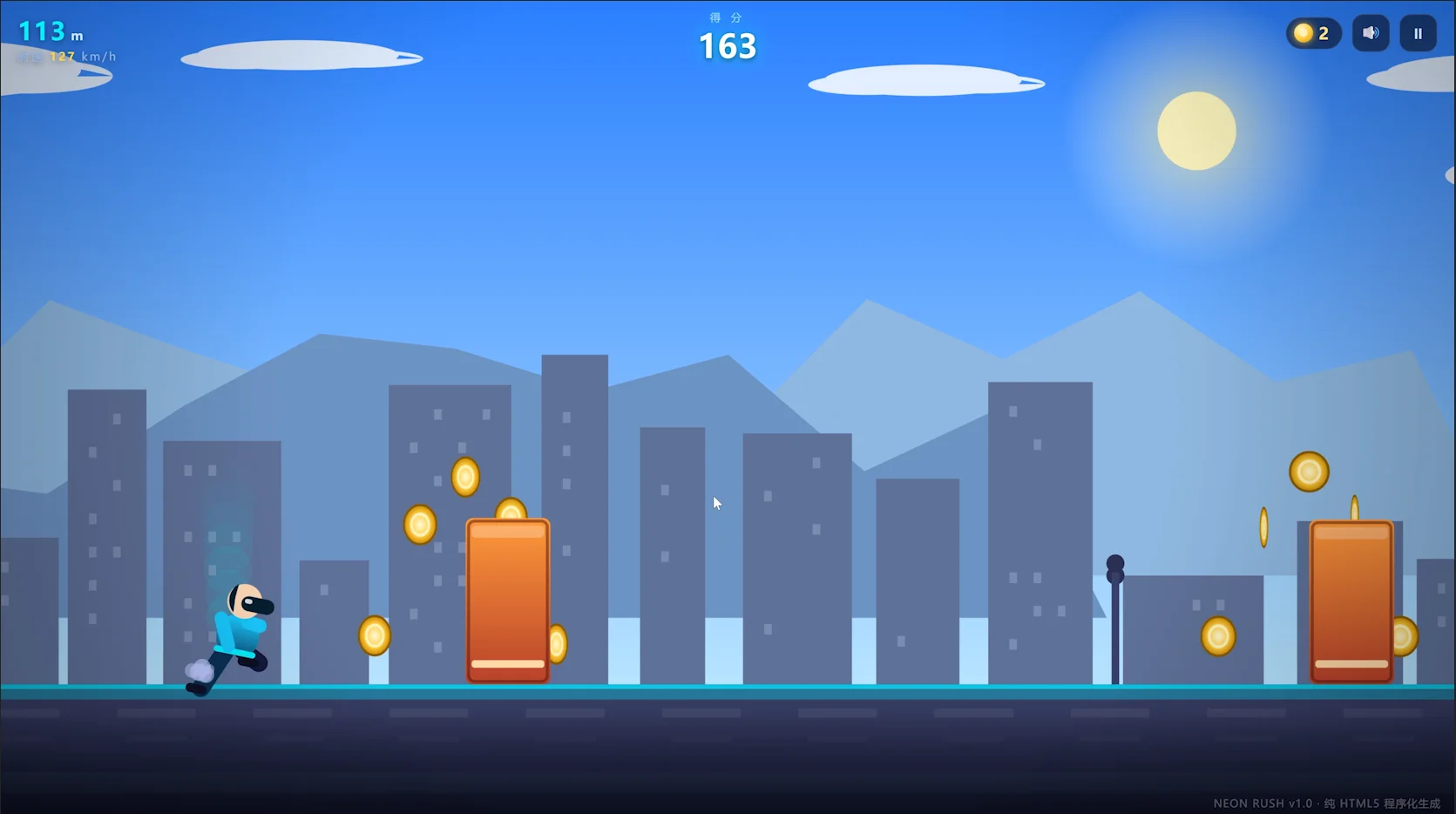
1. Commercial-Grade HTML Parkour Game — One Shot
Prompt: "Write a near-commercial-quality parkour game as a single HTML file. Model a complete game loop with scoring."
The result? A fully playable parkour game with game logic, UI, animations, sound effects, scoring, and game-over logic — all generated in one pass. No debugging. No re-prompting. This is production-ready prototyping, not a toy demo.
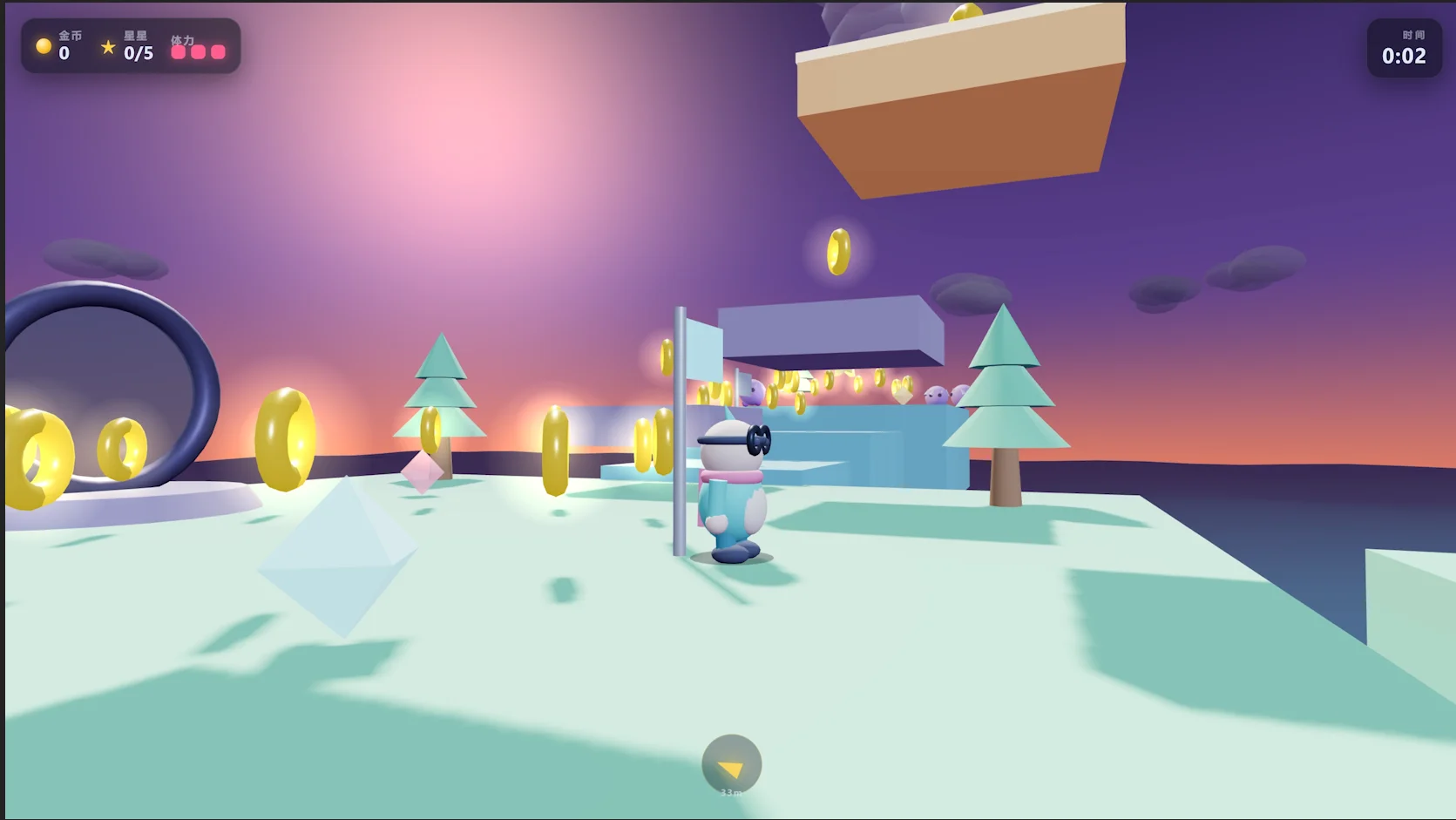
2. 3D Super Mario — Three.js in One Prompt
Prompt: "Create a 3D version of Super Mario."
DeepSeek V4 Flash built the entire Three.js scene — character, map, interactions, camera — in a single generation. The model handled the full pipeline: geometry, textures, collision logic, and player controls. Previous Flash models would have needed 3-4 iterations to get here.
3. FPS Shooting Game — Full Game Logic
The model generated a complete first-person shooter with collision physics, enemy AI behavior, and weapon systems. This is the kind of task that would have required a $14 Claude Opus 5 session just weeks ago.
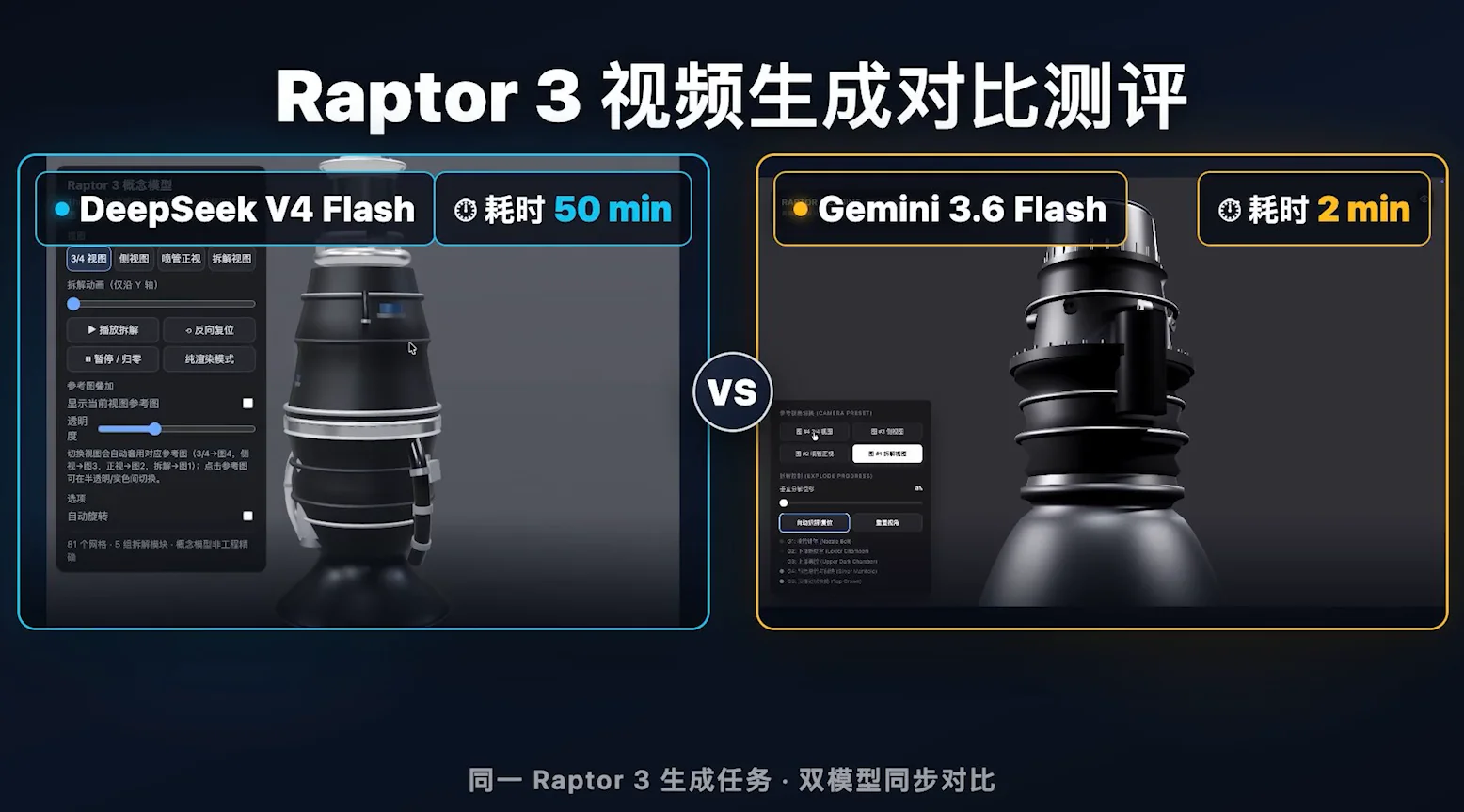
4. DeepSeek V4 Flash vs Gemini 3.6 Flash — Head-to-Head on Raptor3
A developer ran an identical prompt — complete with planning docs and reference images — through both models to generate a Three.js Raptor3 engine model. The community consensus: DeepSeek's output quality is now extremely close to Gemini 3.6 Flash, with some observers preferring DeepSeek's structural detail. For a free, open-source model to trade blows with Google's best Flash-tier offering — that's remarkable.
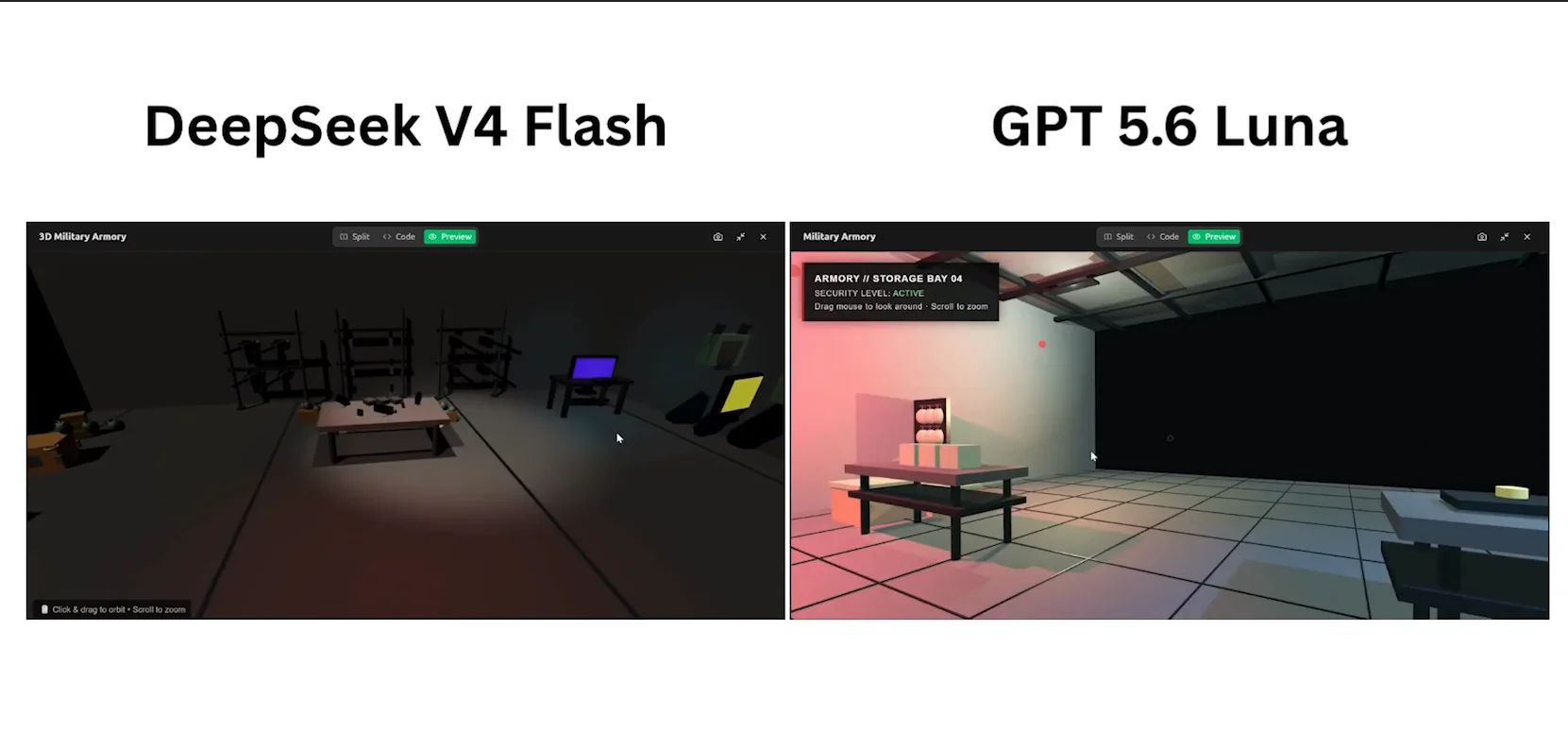
5. DeepSeek V4 Flash vs GPT-5.6 Luna — Same Price, Different League
Another developer put DeepSeek V4 Flash and GPT-5.6 Luna through the same tasks at comparable cost tiers. The test suite:
- Rubik's Cube animation — DeepSeek more stable rotation physics
- Fireworks effects — roughly tied, both impressive
- Handwriting "Hello" animation — DeepSeek produced more natural stroke paths
The verdict? At the same price point, DeepSeek won. GPT-5.6 Luna costs significantly more for equivalent quality — and in several tests, DeepSeek's output was objectively better.
6. SVG Pelican Bicycle — DeepSeek V4 Flash vs GPT-5.6 Terra
The "pelican riding a bicycle" SVG test has become a viral benchmark for creative coding. Both DeepSeek V4 Flash and GPT-5.6 Terra were given the same prompt. DeepSeek produced a more whimsical, better-composed illustration — though GPT-5.6 Terra's version had slightly cleaner SVG path optimization. For pure creative charm, the community gave it to DeepSeek.

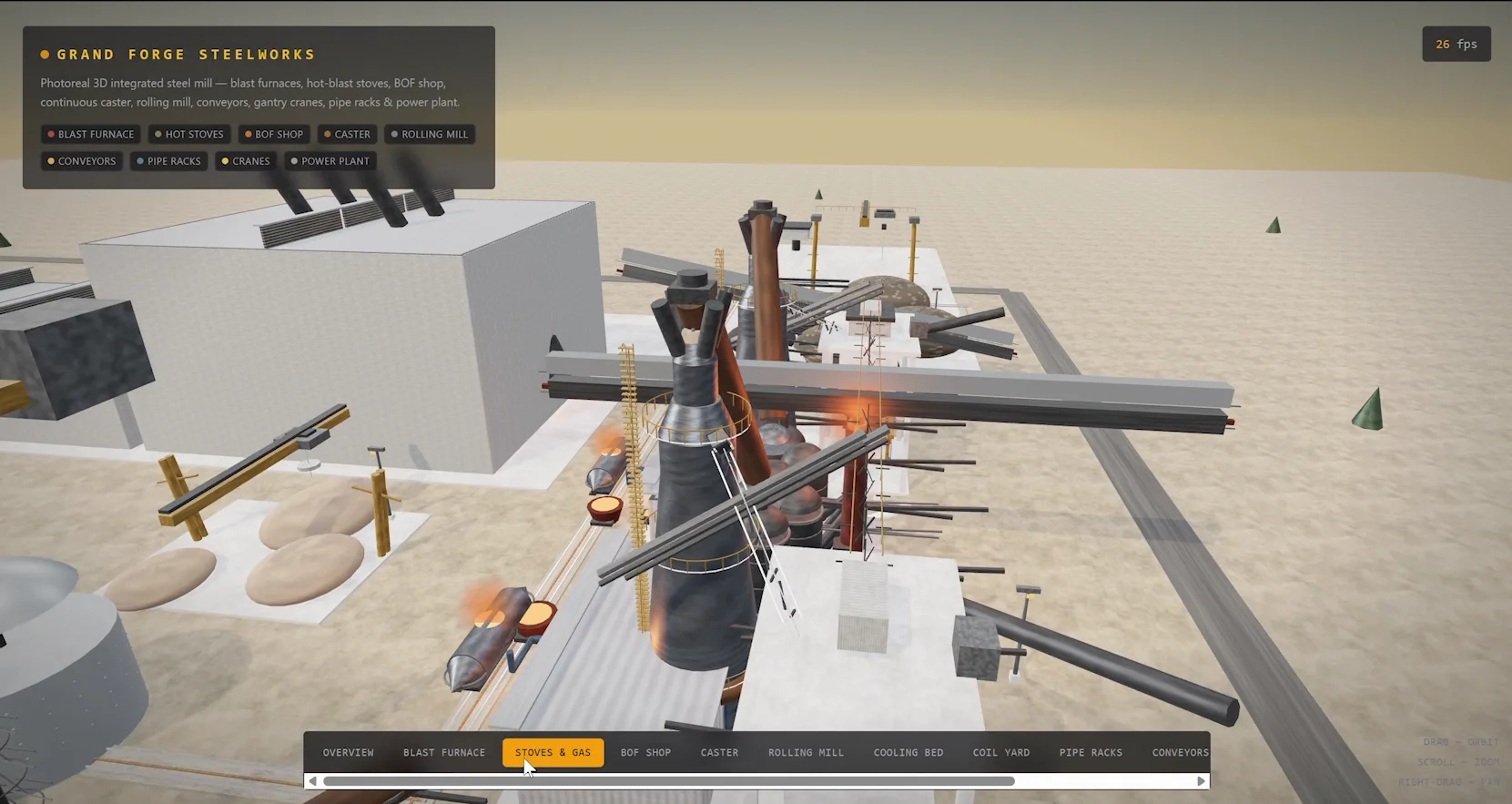
7. Three.js Steel Plant — Industrial-Scale Scene Generation
Developers are pushing DeepSeek V4 Flash to generate massive Three.js scenes: steel plants, mechanical factories, dancing robots, industrial assembly lines. These are scenes that used to require meticulous prompt engineering across multiple rounds. Now, many are generated in a single pass — structurally complete and visually impressive.
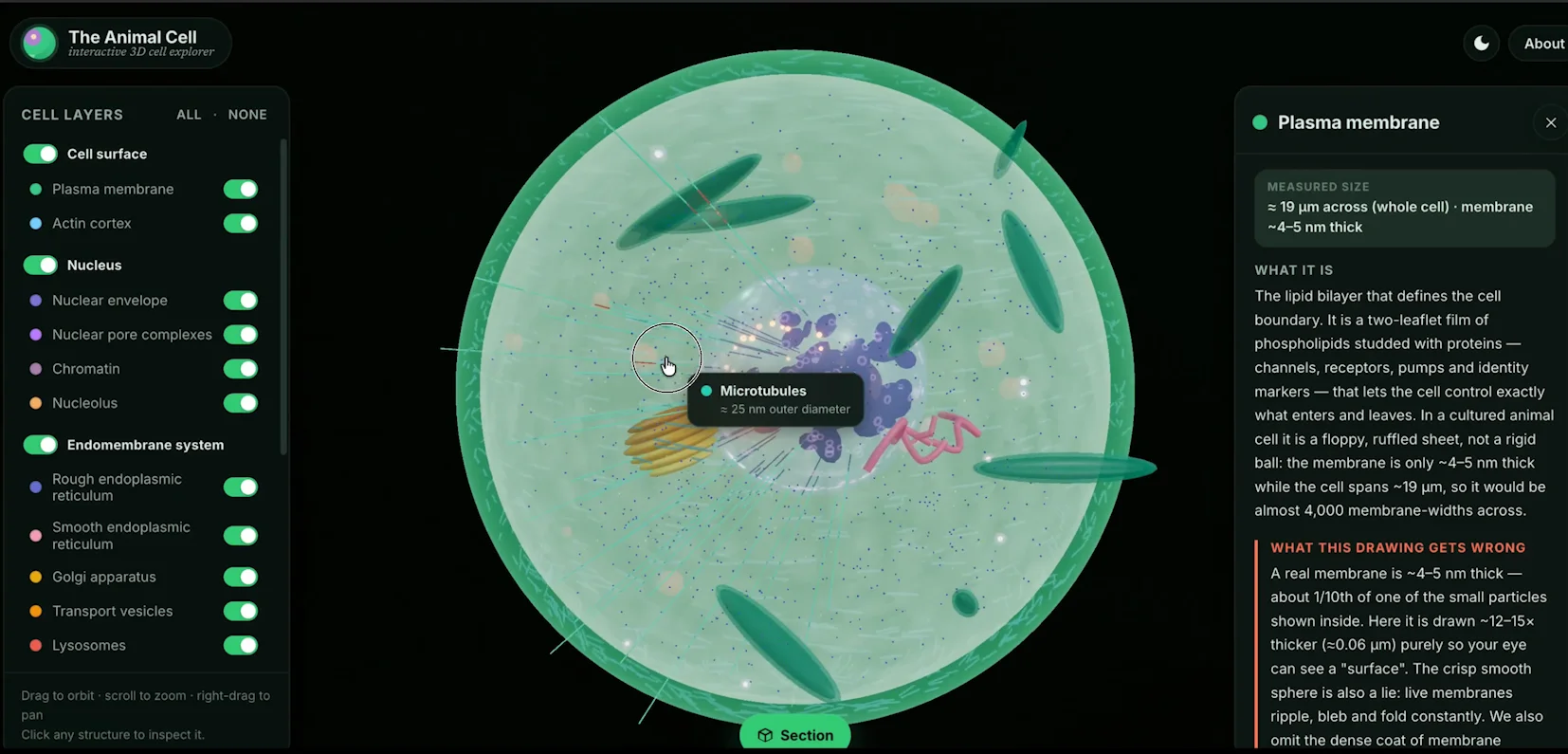
8. Interactive 3D Biology Cell Explorer — Educational Content, One Prompt
One developer had DeepSeek V4 Flash generate an interactive 3D cell explorer — zoom, rotate, inspect organelles, read real biology annotations. The entire page — 3D rendering + educational content — came from a single prompt. This is the kind of tool that would have taken a small team a week to build.
Bonus: Car Engine Modeling — ~75% of Kimi K3 Quality
One more data point: when tasked with generating a 3D car engine model, DeepSeek V4 Flash achieved roughly 70-80% of Kimi K3's output quality. Kimi K3 is a 2.8T-parameter MoE behemoth that costs significantly more to run. For a Flash-tier model to get within striking distance is genuinely impressive.
The Numbers That Made Everyone's Jaw Drop
Capabilities are nice. But what actually made the AI community lose its collective mind was the pricing.
| Model | Cost Per Equivalent Task |
|---|---|
| DeepSeek V4 Flash | $0.0005 |
| DeepSeek V4 Pro | $0.0008 |
| GLM 5.2 | $0.048 (96× more) |
To put that in perspective: GLM 5.2 costs nearly 100× more for the same work. DeepSeek V4 Flash is not just cheaper — it's in a completely different economic universe.
32-Minute Agent Session: $0.07
One developer ran DeepSeek V4 Flash through Hermes Agent continuously for 32 minutes on a complex multi-step workflow. Total cost: $0.07. That's seven cents for over half an hour of autonomous agent work. At this price, running AI agents 24/7 costs less than a daily coffee.
99.5% Cache Hit Rate
Another developer reported that during a complete task run:
- Total spend: approximately ¥0.78 (RMB) — about $0.11
- Cache hit rate: 99.5%
For developers building Agent workflows that make thousands of repetitive API calls, this cache efficiency means costs continue dropping with scale. Most models show the opposite curve.
Free Public API — No Token Required
Don't want to apply for an API key yet? The community has already deployed a free public endpoint on HuggingFace Inference Endpoints:
- ✅ Completely free to use
- ✅ No API token required
- ✅ Fully OpenAI API-compatible
- ✅ Community-shared instance
- ⚠️ Light rate limiting applies (public service)
Run It Locally: GGUF Quantized Versions
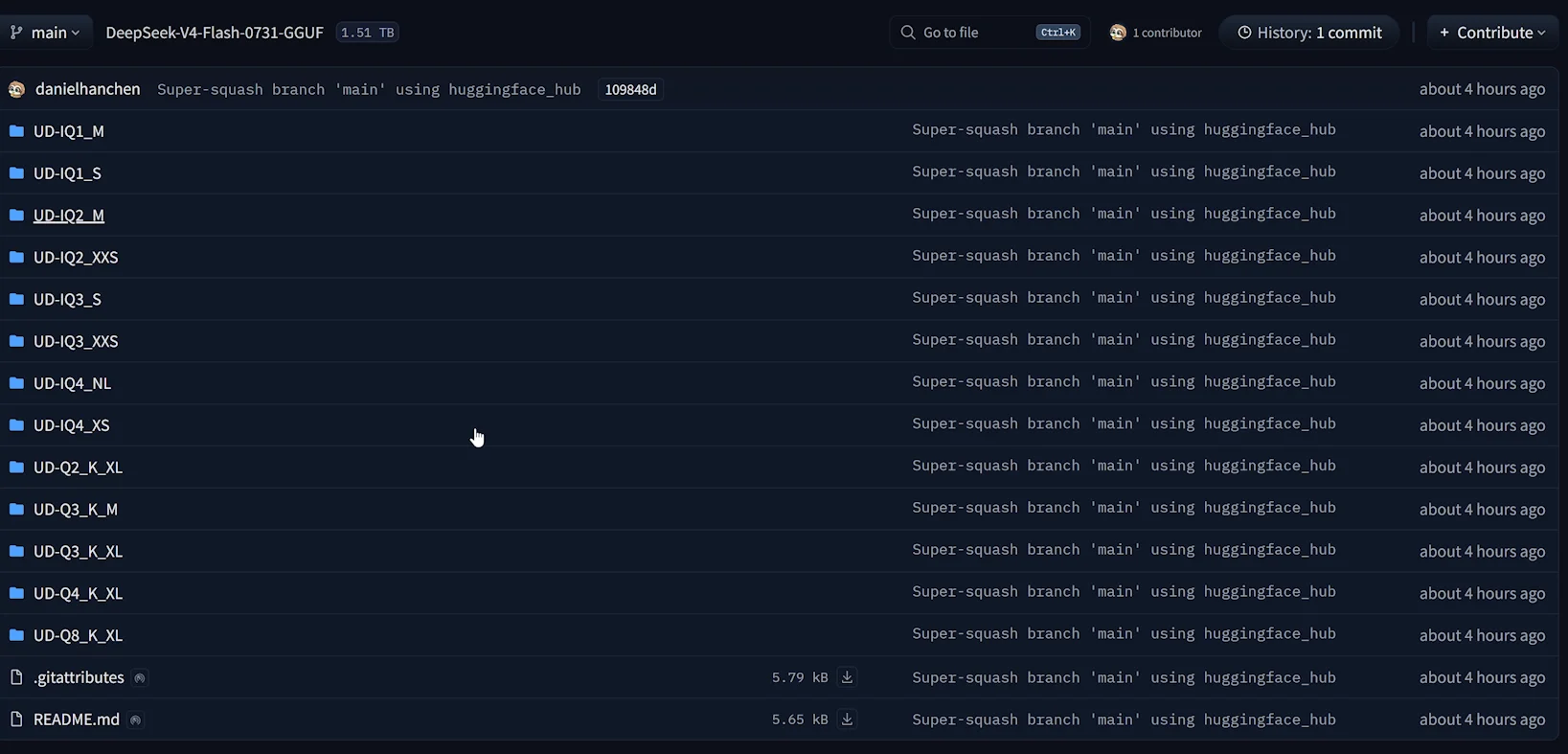
For self-hosters, GGUF quantized versions are already available:
- 4-bit (lossless): requires ~168GB RAM
- 3-bit: requires ~110GB RAM
- Smaller quants: coming soon
Compatible with llama.cpp, Unsloth, and other popular inference frameworks. Download from HuggingFace or ModelScope.
Community Reaction: "The Price-to-Performance King"
The response from the developer community has been overwhelmingly positive:
- "Flash has now comprehensively surpassed GLM 5.2 — its capabilities almost reach Claude Opus 4.8, while the price is roughly one-tenth." — Community consensus
- DeepSeek V4 Flash is now the highest cost-performance model on Hermes Agent, OpenRouter, and multiple inference platforms
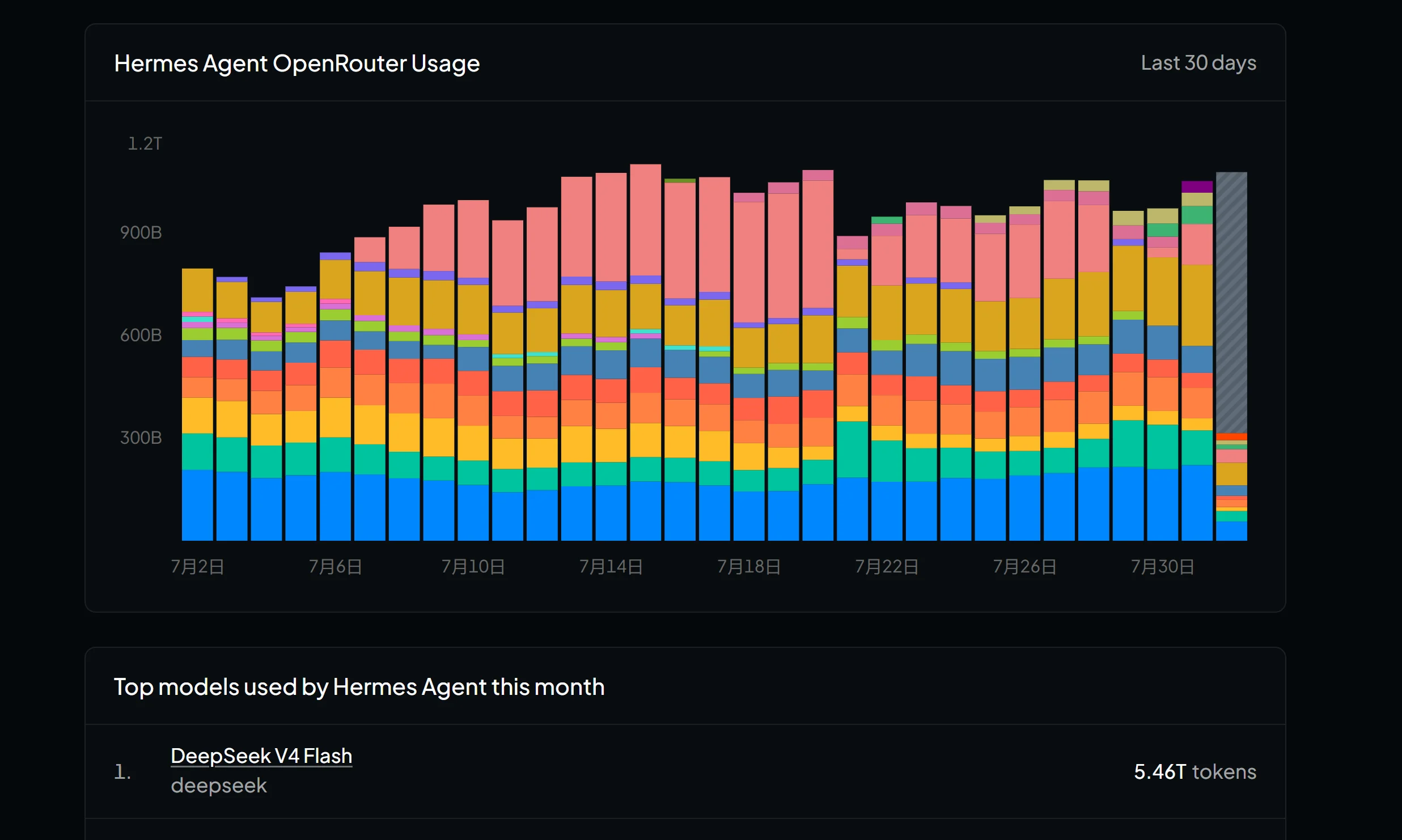
- Hermes community data shows DeepSeek V4 Flash remains one of the most-used models over the past 30 days
Competitive Landscape: Where DeepSeek V4 Flash Fits
| Model | Open? | Agent Quality | Code Gen | Cost/Task | Best For |
|---|---|---|---|---|---|
| DeepSeek V4 Flash | ✅ Open weights | ⭐ Excellent | ⭐ Excellent | $0.0005 | Agent workflows, code gen, cost-sensitive prod |
| Claude Opus 4.8 | ❌ | ⭐⭐ Best-in-class | ⭐⭐ Best-in-class | ~$0.015 | Hardest reasoning, safety-critical apps |
| GPT-5.6 Luna | ❌ | ⭐ Excellent | ⭐ Excellent | ~$0.008 | General-purpose, creative tasks |
| Gemini 3.6 Flash | ❌ | ⭐ Very Good | ⭐ Very Good | Free (limited) | Multimodal, long context |
| Kimi K3 | ✅ Full open-source | ⭐⭐ Excellent | ⭐⭐ Excellent | $8.90/session | Complex projects, deep research |
| GLM 5.2 | ❌ | ⭐ Good | ⭐ Good | $0.048 | Chinese-language tasks |
The pattern is clear: DeepSeek V4 Flash occupies a unique position — near-frontier capability at commodity pricing. Kimi K3 is more capable for the hardest problems but costs orders of magnitude more. Claude Opus 4.8 is still the quality king, but at 30× the price per task. For the vast majority of real-world agent and coding workflows, DeepSeek V4 Flash hits the sweet spot.
Who Should Use DeepSeek V4 Flash
✅ Perfect For:
- AI agent developers — at $0.07 per 30-minute session, you can run agents continuously without watching the meter
- Startups shipping AI features — the Responses API + Codex support means drop-in compatibility with existing OpenAI SDK code
- Frontend developers — the Frontend Coding Arena #7 ranking isn't theoretical; this model generates real, working UI code
- Self-hosters on a budget — GGUF quants run on consumer-grade multi-GPU setups (168GB for 4-bit)
- Anyone currently paying for GPT-5.6 Luna API calls — you'll get comparable quality at a tiny fraction of the cost
⚠️ Not Ideal For:
- Safety-critical applications — Claude Opus 4.8 still has stronger alignment and refusal boundaries
- Single-GPU hobbyists — even quantized, this is a big model; look at MiniCPM5-1B for laptop-friendly options
- Purely creative/artistic tasks — GPT-5.6 and Claude still have an edge on subjective aesthetic quality
FAQ
Is DeepSeek V4 Flash really free?
The model weights are open and free to download. The community has also deployed a free public API on HuggingFace (rate-limited). Official API pricing from DeepSeek is extremely low — ~$0.0005 per typical task.
How does it compare to Claude Opus 4.8?
Claude Opus 4.8 is still the overall quality leader, especially for the hardest reasoning tasks and safety-critical applications. But DeepSeek V4 Flash gets remarkably close — community consensus places it at roughly 85-90% of Opus 4.8's capability — at about 3% of the cost. For most real-world tasks, the difference is negligible.
Can I run it locally?
Yes, GGUF quantized versions are available. 4-bit requires ~168GB RAM (think 4× A6000 or 2× A100). 3-bit drops to ~110GB. Consumer GPU setups will need to wait for smaller quants.
Does it support tool use / function calling?
Yes — the 0731 update added native Responses API support and full Codex compatibility. It works with Hermes Agent, OpenRouter, and any OpenAI-compatible tool-use framework.
What's the catch?
Honestly? The biggest limitation right now is rate limiting on the free community API. If you need production reliability, use the official DeepSeek API or self-host. Also, as with all open models, there's no safety guarantee — you're responsible for your own deployment guardrails.
The Bottom Line
DeepSeek V4 Flash 0731 is not just an incremental update — it's a statement. The AI industry has been stuck in a narrative where "cheap" meant "compromised." DeepSeek just proved that narrative false.
For $0.0005 per task, you get a model that ranks #7 globally on Frontend Coding Arena, runs 32-minute agent sessions for 7 cents, and generates complete Three.js scenes, HTML games, and interactive educational tools from single prompts. The open-source AI revolution isn't coming — it's already here, and it's cheaper than anyone predicted.
If you're building AI-powered products in 2026, you owe it to your burn rate to try DeepSeek V4 Flash. The numbers don't lie — and neither do the demos.
⭐ Rating: 4.6/5 — The best cost-performance ratio of any model in 2026.